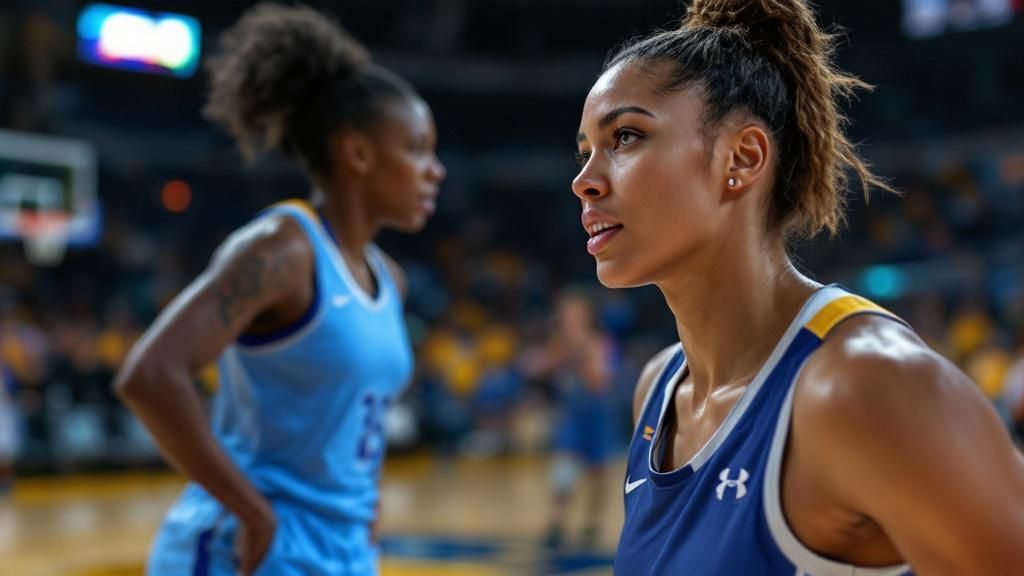
Women’s basketball players around the world are increasingly vocal in their calls for equal pay and considerable resources in their sport. Despite decades of athletic excellence and expanding audience interest, female athletes remain significantly below the earnings of their male counterparts, whilst obtaining scant media coverage and sponsorship opportunities. This article investigates the ongoing campaign for equal treatment in professional basketball, analysing the systemic barriers players face, the economic arguments supporting their demands, and the fundamental reforms needed to ensure women’s sport receives the recognition and resources it rightfully deserves.
The Wage Gap Crisis in Female Basketball
The financial gap between male and female professional basketball players represents one of the most egregious disparities. Women participating in premier leagues earn significantly less than their male counterparts’ compensation, with some players drawing annual pay far under the poverty line. This gap stretches past base salaries to encompass sponsorship deals, endorsement opportunities, and broadcasting rights, producing a compounding disadvantage that damages professional longevity and professional development for female athletes.
Investment inequalities further exacerbate the pay gap, with women’s leagues getting limited financial support for facilities, promotion, and athlete development initiatives. Whilst men’s basketball organisations receive substantial television contracts and corporate sponsorships, women’s teams struggle with limited budgets that constrain roster depth, calibre of coaches, and facility standards. These systemic inequities sustain a cycle where underfunding leads to lower public profile, which in turn supports reduced funding, ultimately harming players who warrant equitable compensation for their talent, commitment, and ability to entertain.
Investment Disparities and Media Coverage
The financial gap between men’s and women’s elite basketball remains striking, with funding for women’s leagues falling well short of their male counterparts. Media organisations assign far fewer broadcasting hours to women’s matches, resulting in diminished exposure and sponsorship revenue. This disparity applies to playing venues, coaching resources, and advertising investment, producing a repeating pattern where lower investment leads to decreased prominence, which in turn supports additional financial reductions. The consequence is a competitive disadvantage that undermines the advancement and performance level of women’s basketball worldwide.
Media coverage plays a key role in establishing the commercial potential of any sport, yet women’s basketball receives a small portion of the airtime allocated to men’s competitions. Major broadcasting networks often schedule women’s matches at inconvenient times or consign them to subsidiary networks, constraining audience scope and engagement. This disparity in airtime directly impacts sponsorship opportunities and merchandise sales, leaving female athletes with limited financial incentives. Tackling these disparities requires strategic investment from media companies, broadcasters, and corporate sponsors who identify the untapped potential and expanding fanbase within women’s professional basketball.
Player-Led Movements and Upcoming Outlook
Women’s basketball players have established themselves as strong voices for institutional reform, utilising their profiles to address systemic disparities and catalyse coordinated efforts. Players such as Sue Bird and Diana Taurasi have emerged as leading advocates for equitable funding, harnessing their standing to illuminate the difference between men’s and women’s professional sports. Their activism has catalysed substantive dialogue amongst administrative organisations, sponsors, and media outlets, showing that collective player action can deliver tangible progress. Through organised campaigns and public advocacy, these athletes continue to strengthen appeals for comprehensive reform across salaries, facilities, and media coverage.
The trajectory of women’s basketball requires ongoing commitment from various parties committed to genuine transformation. Modern policies adopted by leagues such as the WNBA—including increased wage structures and improved marketing initiatives—offer strong models for worldwide federations. However, substantial obstacles remain, requiring sustained push from players, supportive organisations, and committed fans. The path of women’s professional basketball will ultimately reveal society’s willingness to invest equitably in female athletes, recognising both their outstanding ability and their invaluable contributions to sport’s cultural landscape.
Moving ahead, the convergence between player activism and organisational reform offers unprecedented opportunities for reshaping professional basketball’s future. By sustaining progress and demanding accountability, women athletes continue paving pathways towards true parity, motivating younger generations whilst substantially shifting perceptions of women’s sport globally.
